 Binbin’s AcupunctureBook online
My Journey of Chinese Medicine and Acupuncture
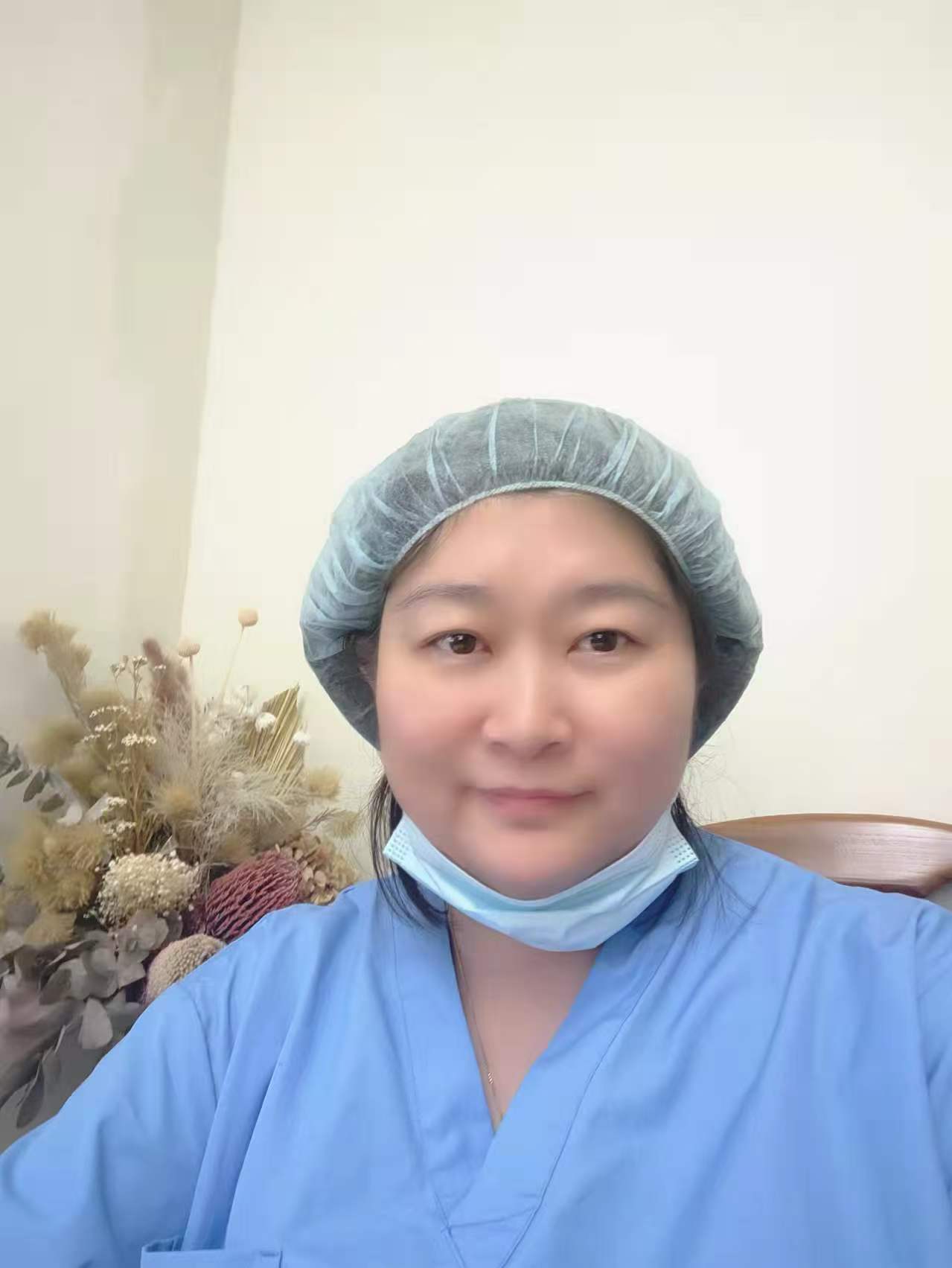
Personal account by Dr. Binbin Michelle Li
The Treatment — Back to nature, back to you.
At Binbin’s Acupuncture, care is calm, thoughtful, and individualised. Each consultation is guided by careful listening, detailed observation, and a deep respect for each person’s unique body, rhythm, and health journey.
Dr. Binbin Michelle Li
Dr. Binbin Michelle Li is the founder of Binbin’s Acupuncture (彬彬的针灸), a Chinese medicine and acupuncture practitioner, researcher, and educator based in Sydney. She has provided acupuncture and Chinese herbal medicine services in Sydney for over 10 years, serving the community since 2011.
My Heritage: A Foundation in Healing
My journey in Chinese medicine began long before my formal training. I grew up inspired by my grandfather, Professor Hao Gang (郝刚), one of the former heads of Nanjing University of Chinese Medicine. As a distinguished figure in Beijing’s medical community and a guest lecturer at Harvard University in the 1950s, he set a global standard for our field. His career, decorated with 23 awards for innovative research, serves as the blueprint for my own dedication to excellence in patient care.
My Journey before Australia
Building on this foundation, I dedicated my life to mastering the art and science of acupuncture.
Elite Education: I completed a five-year medical degree, followed by a Master’s in Acupuncture at leading universities in China.
World-Class Clinical Practice: I was a research assistant at Beijing University of Chinese Medicine (BUCM) and later conducted my Master’s research at the Acupuncture Hospital of the China Academy of Chinese Medical Sciences (CACMS) in Beijing. This is the same institute associated with Nobel Prize winner Tu Youyou.
Mentorship Under Masters: During my time in Beijing, I was fortunate to practise and study under many of China’s renowned acupuncture professors, including Prof. Jinhong Yang, Prof. Zhongchao Wu, and Prof. Shaogong Shen, and was highly recommended by the renowned acupuncturist Prof. Shennong Cheng.
An Intangible Cultural Heritage Lineage
My commitment to traditional practice was solidified in 2015 when I became a formal disciple of Professor Zhang Jin (张缙). Professor Zhang is a representative lineage holder for acupuncture and moxibustion, a practice inscribed on the UNESCO Representative List of the Intangible Cultural Heritage of Humanity. The needling techniques I study and use form part of this tradition passed down from master to disciple.
Bridging Worlds: From Beijing to Sydney
Since 2011, I have been proud to bring this knowledge to our local community in Sydney. I am not just a practitioner; I am a teacher and a researcher.
As a Teacher: For six years (2011–2017), I was a lecturer at the Endeavour College of Natural Health, teaching Chinese herbal medicine and formulas to the next generation of Australian practitioners.
As a Researcher: I am currently conducting independent research at the clinic and seeking future research opportunities related to my previous studies. I earned my PhD in clinical reasoning in Chinese medicine at the University of Technology Sydney (UTS). My research focuses on clinical thinking and the diagnostic process, so that my approach to care draws on both traditional knowledge and contemporary scientific understanding.
Cultural heritage recognition concerns the traditional practice; it is not UNESCO certification of an individual practitioner or proof of treatment effectiveness.
UNESCO cultural heritage listing ↗
Qualifications & Professional Standing
PhD, Clinical Reasoning in Chinese Medicine and Acupuncture (University of Technology Sydney, UTS)
Inheritor, Acupuncture Needling Technology (TCM Acupuncture Inheritance Committee of WFAS; traditional heritage lineage)
Psychology (UNSW, candidate; postgraduate online course, student)
Master of Medicine (Acupuncture, Moxibustion & Tuina)
Bachelor of Medicine (Acupuncture, Moxibustion & Tuina)
Memberships
Accredited Member, Australian Acupuncture and Chinese Medicine Association (AACMA)
Accredited Council Member, Chinese Medicine & Acupuncture Society of Australia (CMASA)
Member, World Foundation of Chinese Medicine Societies (WFCMS)
Working Experience
| Period | Institution |
|---|---|
| From 2016 | University of Technology Sydney |
| 2011–2017 | Endeavour College of Natural Health |
| 2007–2010 | China Academy of Chinese Medical Sciences |
| 2004–2006 | Beijing University of Chinese Medicine |
The UTS entry records the research journey commencing in 2016; it does not assert a current university employment position.
Publications
- ORCID ID (as supplied): Orcid.org/0000-00001-8417-2771
- Researcher ID: P-7404-2017
- Research Interest Score: 9.2 (supplied profile figure; may change)
The supplied ORCID contains an extra digit and is shown as text pending correction.
B Zhang, 2013, “The clinical observation of abdominal acupuncture on Dysmenorrhea”, Journal of Chinese Medicine and Health. 2013, 14: 21.
B Zhang, 2013, “Acupuncture for Dry eyes treatment”, Journal of Chinese Medicine and Health. 2013, 14: 61.
B Zhang, Y Zhou, 2009, “Case study of acupuncture for bladder pain”. China Foreign Medical Treatment. 28, 15: 105.
L Lin, B Zhang, 2009, “Chinese Medicine and acupuncture treatment for Alzheimer’s Disease”. Guangming Journal of Chinese Medicine, 24, 07: 105.
B Zhang, L Zhi, J Yang, 2009, “How to Balance Six Meridians in wellbeing”, Medicine and Health Care. 17, 03: 87–90.
Publication details are supplied by the author. Listing a publication does not establish clinical efficacy.